By Clover Electrical ·
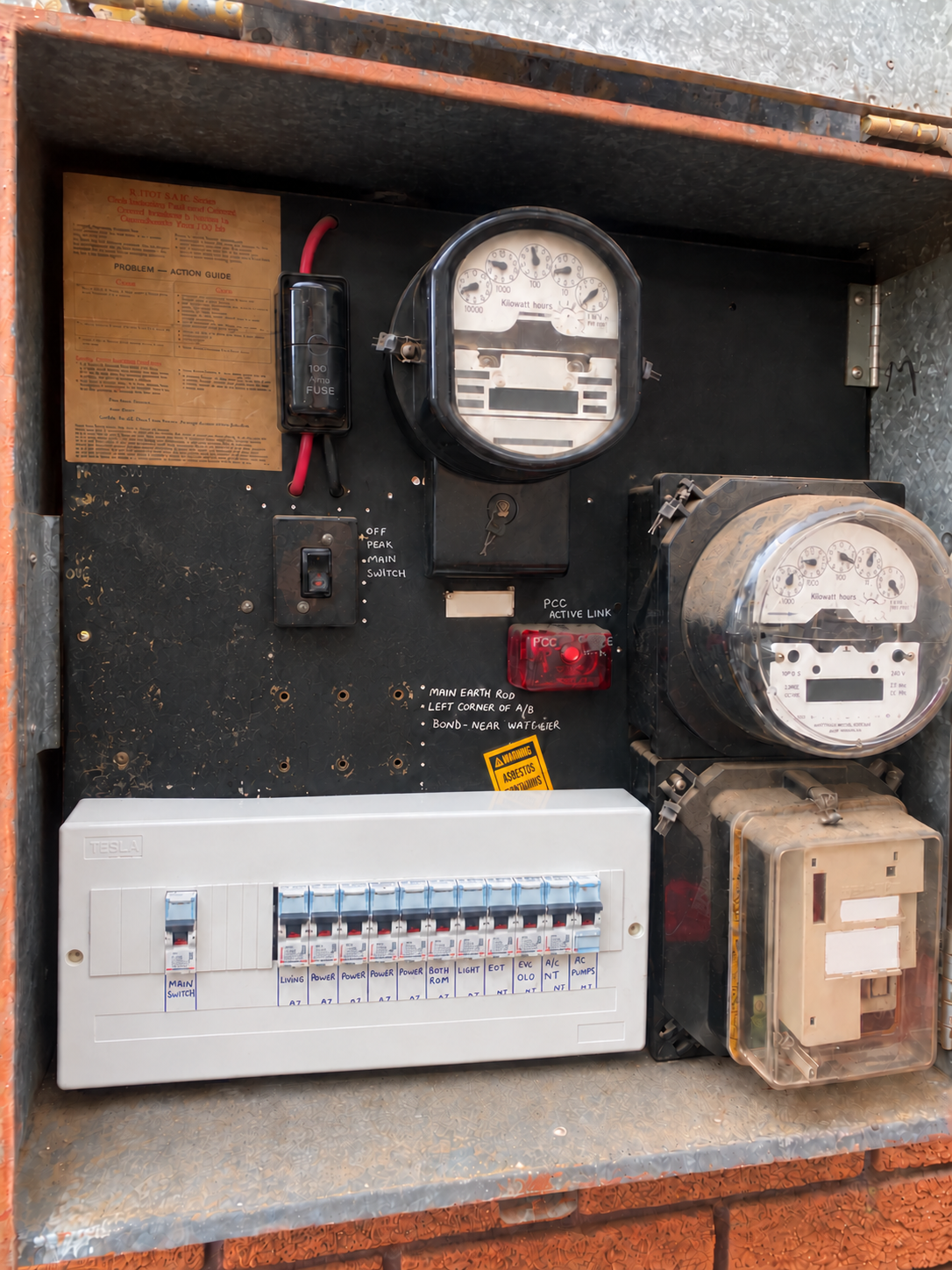
A switchboard can keep supplying power even when it no longer suits the home. The useful question is not just whether the lights turn on, but whether the board has appropriate circuit protection and capacity for what you use today. Here are the signs worth discussing with a licensed electrician.
Ceramic fuses and missing safety switches
Ceramic rewirable fuses are a common feature of older switchboards. A fuse provides overcurrent protection, but it does not do the same job as a safety switch. A safety switch, also called an RCD, detects current leaking from a circuit and disconnects the supply.
A modern RCBO combines safety switch and circuit breaker protection for an individual circuit. During an inspection, the electrician checks what protection your board actually has. Do not remove a panel or touch internal wiring to find out.
Repeated tripping, flickering and signs of heat
A circuit that trips repeatedly needs investigation. It could be an appliance fault, an overloaded circuit or a wiring problem rather than a switchboard that simply needs replacing. An inspection helps separate those possibilities.
Buzzing, discolouration, heat or a burning smell should not be ignored. Do not open the board, touch suspect equipment or keep resetting a device that trips. Keep clear and get a licensed electrician to assess it. If there is smoke or fire, move to safety and call 000.
- Repeated unexplained circuit trips
- Flickering or dimming lights
- Visible heat damage or discolouration
- No clearly identified safety switches
Planning solar or home EV charging?
New equipment may need dedicated circuits and suitable protection. Space for another breaker is only one part of the decision: the electrician also checks the existing supply and the load the home is likely to draw.
The NSW Government's switchboard guide identifies major electrical upgrades, older panels and repeated electrical problems as reasons to arrange an assessment. It does not mean every EV charger or solar installation automatically needs a replacement board.
What happens at a Clover inspection?
We inspect the existing switchboard, check the circuit protection, supply type and space, and discuss planned additions. If the backing panel needs special handling or consumer mains work is involved, that is explained before you agree to the job.
You receive a written report and a fixed written quote. Clover switchboard upgrades start from $1,500; the final price follows the inspection. The inspection is free, and you receive the report whether or not you proceed.
Further reading: NSW Climate and Energy Action: switchboard upgrades.