Halogen to LED
The most common halogen to LED conversion is a straight swap. The old halogen lamp and its transformer come out, and an LED downlight goes into the same ceiling hole wherever the size allows. Quick, tidy and little or no making good.

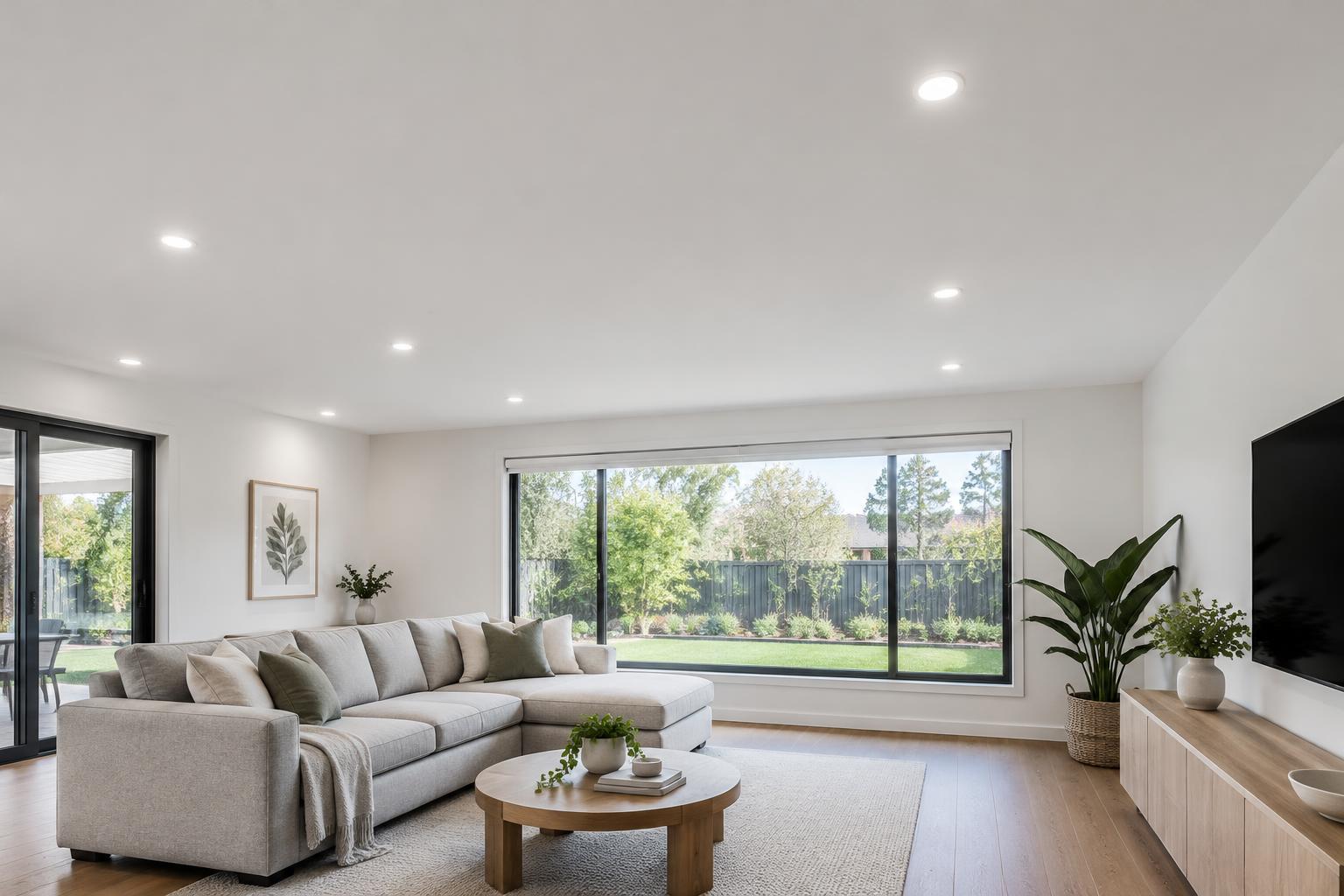
Applies to new downlight installations.
The most common halogen to LED conversion is a straight swap. The old halogen lamp and its transformer come out, and an LED downlight goes into the same ceiling hole wherever the size allows. Quick, tidy and little or no making good.
Old oyster or batten fittings in the middle of the ceiling are removed and replaced with a planned layout of recessed LED downlights. It changes the feel of a room, and it is a bigger job, explained below.
LED downlights use a fraction of the power of the halogens they replace, and they last far longer.
A good LED layout gives clean, even light without the hot spots and yellow cast of old halogens.
Halogen lamps get hot enough to be a concern near insulation and timber. LEDs run far cooler.
Old halogen transformers are a common failure point. Most LED fittings remove them altogether.
Converting oyster fittings to downlights is more involved than a halogen swap, and it is worth knowing that up front.
We run new cabling to each downlight position and cut new holes in the ceiling for each fitting. Roof-space access is not always needed, and downstairs installation in a two-storey home is often possible, with positioning depending on the beams. Where the old oyster light was mounted, the ceiling is left with a fixing point and sometimes a mark or hole that needs making good.
We will talk through the layout, the access and what making good looks like for your ceiling during the inspection, so the downlight installation cost and the finished result are both clear before you decide.
Simple from start to finish
We look at what is actually there and discuss what you need. For switchboards, you receive a written report whether or not you go ahead.
The scope and price are set out before work starts. You choose what goes ahead, with no work done without your approval.
A licensed electrician completes and tests the work. You receive a Certificate of Compliance for Electrical Work where required.
Tell us which rooms and roughly how many lights. We will come out and plan it with you.